




Do you find that your nose gets ticklish when you step out into the sun suddenly sometimes? If so, you just might have the Autosomal-dominant Compelling Helio-Ophthalmic Outburst syndrome (ACHOO!) - a phenomenon noted even by Aristotle in his Book of Problems, but thought obscure enough by scientists to bother giving it its own above syndrome name/acronym until 1978! More simply called the Photic Sneeze Reflex (PSR), it may result from a neural crosswiring in one's face - a current leakage between the optic (which controls pupil contraction due to sudden sunlight exposure) and trigeminal (senses nasal irritation and causes sneezing) nerves! [Hat-tip to Mark Hoofnagle of Denialism Blog]Aristotle mused about why one sneezes more after looking at the sun in The Book of Problems: "Why does the heat of the sun provoke sneezing?" He surmised that the heat of the sun on the nose was probably responsible.
Some 2 ,000 years later, in the early 17th century, English philosopher Francis Bacon neatly refuted that idea by stepping into the sun with his eyes closed—the heat was still there, but the sneeze was not (a compact demonstration of the fledgling scientific method). Bacon's best guess was that the sun's light made the eyes water, and then that moisture ("braine humour," literally) seeped into and irritated the nose.
Humours aside, Bacon's moisture hypothesis seemed quite reasonable until our modern understanding of physiology made it clear that the sneeze happens too quickly after light exposure to be the result of the comparatively sluggish tear ducts. So neurology steps in: Most experts now agree that crossed wires in the brain are probably responsible for the photic sneeze reflex.
A sneeze is usually triggered by an irritation in the nose, which is sensed by the trigeminal nerve, a cranial nerve responsible for facial sensation and motor control. This nerve is in close proximity to the optic nerve, which senses, for example, a sudden flood of light entering the retina. As the optic nerve fires to signal the brain to constrict the pupils, the theory goes, some of the electrical signal is sensed by the trigeminal nerve and mistaken by the brain as an irritant in the nose. Hence, a sneeze.
Yet another example of our not-so-intelligently-designed but marvelously quirky evolved bodies, eh?
Friday, January 25, 2008
Now I know why the sun sometimes makes me go ACHOO!


Wednesday, January 23, 2008
We are not the only political animals
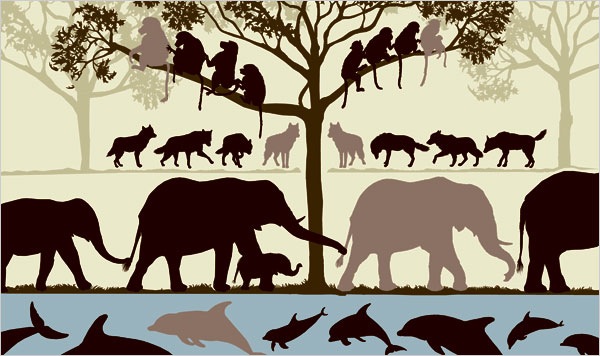
Aristotle wrote a couple of millenia ago that "Man is by nature a political animal", and who can argue with that, especially in this year of a presidential election here in the US. But what may be surprising is that it took so long after that sage for people to recognize that we are not the only "political animals". This week's Science Times section of the New York Times (which you students must've noticed tucked inside one of yesterday's NY Times, free copies of which we get daily on campus; if you didn't notice it - why not??) led with a cover article by Natalie Angiers on this topic. Its a nice, if not too surprising (at least to me) article that is well worth the read. Turns out that humans are indeed political animals by nature because we evolved that way!
Thursday, January 17, 2008
Neil Shubin on preparing for his 5 minutes with Colbert
Following his successful appearance on the Colbert Report last week, Neil Shubin has shared his experience (on Pharyngula) of preparing to beard that particular lion in his den, and on the challenges of communicating science in the sound-bite medium in general. Well worth reading whether you are a fan of Shubin or Colbert, or simply interested in bringing science to the public discourse.
It can't be an easy thing to do: the prospect facing an aggressive TV talking-head (even a fake one) was enough to give Shubin a sleepless night. But the challenge goes beyond simply having to face an uninformed and potentially hostile host whose primary goal is to provide entertainment - there is a more fundamental communication issue. Shubin writes:
In thinking about the experience a few days later I have one thought on language. As scientists we are very used to using language with a great deal of precision (note the string in the commentary on common ancestry, group inclusion, etc.). The challenge is adapting our highly precise vocabulary to the demands of a five minute performance on a show which is fundamentally not about science. It is a tough tightrope to walk to balance between language that is both engaging and precise. I had mixed success, but that has to be our aspiration for these kinds of experiences.He ended up doing a pretty good job if you ask me - and certainly sold at least one copy of his new book (well, soon - its on my wishlist now) - but I'm not really the target demographic. I wonder if it is possible to measure his success with the show's typical audience - perhaps through counting the number of downloads this interview gets from the Comedy Central website? if they keep track of that sort of thing?
And you can't really argue with this final thought:
You can ask the question, a valid one, why bother with these kinds shows? If it is so difficult, and the conceptual and linguistic apparatus of science doesn't easily conform to this venue, why do it? For me the answer is that we need to make science part of the public conversation. We live in a society where Britany Spears latest foible gets more ink than Mello and Fire's 2006 Nobel discovery of RNAi-- a breakthrough on a little worm that will likely lead to treatments of many diseases. Something is wrong here.Hear! Hear!
Wednesday, January 16, 2008
Spring is in the air...
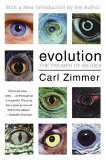
Well, not exactly, but the Spring semester sure is in the foggy air here at Fresno State, and we kick off the Evolution class today. Time for me to welcome to all the new students! Feel free to look around this blog to find stuff of relevance to the class, and some not so relevant but fun stuff also! The class textbooks are linked to the left here, and we will use both this blog and the Blackboard site extensively throughout.
I'll see you in class very soon!
And those of you blog readers who are not in my class - expect a lot more material to be posted here over the coming months as I increase my output, and, more importantly, the students start supplying new posts as well.
Tuesday, January 15, 2008
Did the human breast evolve from fish teeth?
Well, you'll find out, over the course of this semester, if you are taking my Evolution class. In the meantime, watch the righteous Stephen Colbert tangle with the evilutionary biologist Neil Shubin over this and other questions about human origins. Yes that's the very same Dr. Shubin who codiscovered the fishapod Tiktaalik roseae, and has just published "Your Inner Fish: A Journey into the 3.5-Billion-Year History of the Human Body"
Enjoy:
Sunday, January 6, 2008
Start off the new year right

Get thee thine own copy of the new edition of the National Academy of Sciences' little book Science, Evolution, and Creationism! In addition to the $12.95 paperback version (available at Amazon), it is also available for download in its entirety as a PDF file via the publisher's website (free - just look under the PDF section below the book cover). There is also a handy 8-page summary brochure you can download. For who among us who teach evolution in the Central Valley would not want to keep both of these handy as simple resources to address faithful doubters of evolution in our classes or outside them? I know I'll have it on hand as I start teaching Biosc 180 (Evolution) again in another 10 days or so.
Saturday, December 22, 2007
who needs a reality-based education, anyway? eh?
Once again, Wiley's creation Danae hits it right on the nail! Do I want a student like her in my classroom when I start another Evolution class next month, however?

Wednesday, December 19, 2007
Monday, December 10, 2007
No Way Home
While spending some quality time with a sink-full of dishes this past weekend, I caught up, as has become my custom, with some time-shifted radio - aka podcasts of various shows (NPR being a prominent source). And I was pleasantly surprised to find, on the December 5, 2007 edition of Fresh Air, Terry Gross interviewing the Princeton ecologist and birder David Wilcove, who has a new book out that I also had somehow not heard of: No Way Home - The Decline of the World's Great Animal Migrations. You can listen to the interview online via NPR (realaudio), download the podcast on iTunes if you are quick (itunes usually has the last 10 shows), or click here for an mp3 version. Enjoy!


 Posts
Posts


