Showing posts with label student post. Show all posts

Tuesday, December 29, 2009

A biology graduate student reacts to Eugenie Scott

Student post by Kelli Upton, in response to Eugenie Scott’s recent talk at Fresno State.
            Dr. Scott, although I was previously unaware, is a highly regarded advocate of evolution and for keeping intelligent design out of schools.  As the director of the National Center for Science Education, she has mastered handling interrogation from opposing sides of her argument. This was evident when members of the community confronted her on issues after the seminar. She only slipped a few times as far as I’m concerned, with being too condescending. Even though a self-described young-earth creationist applauded Dr. Scott for her continuum from creation to evolution, I thought that this continuum had the sole purpose of tying intelligent design proponents with ridiculous movements such as “flat earthers.” I believe that arguments made from creationists like Michael Behe etc., including arguments of irreducible complexity, are helpful in that they force us to investigate further into what the scientific community has already accepted as a reality. They also give us tools to provide better evidence against intelligent design. The dichotomy that Dr. Scott suggests we so desperately need to reject is only made more distinct when scientists are demeaning towards the other side. The way evolution is taught by some on this campus is exactly as such. In actuality, it would do a young scientist good to learn creationist/intelligent design points of view so that we are able to have constructive conversations with one another and not alienate people from science. Although this information should be pursued outside of the classroom, it would no doubt be helpful when inevitable debate pops up during class discussion.  Overall, I believe Dr. Scott did a nice job of conveying this and I think the take home message was that scientists cannot account for the supernatural and therefore only the natural world should be considered when studying science. I was enthralled with her presentation and it was a real treat to have her on campus. I look forward to reading some of her work.

Read More...

Tuesday, December 8, 2009

A Christian student reflects on Eugenie Scott's talk about Evolution/Creationism

At the podium-3 copyWhat an overwhelming response we had at Eugenie Scott's wonderful lecture last week on "Why the fuss about Darwin and Evolution?"! Thank you, Genie, for such a great talk, for inspiring and recharging those of us in the thick of the evolution/creationism culture war in the Central Valley, for showing us how to address these issues in a graceful, polite, and inclusive manner. And thank you, all of you who came to campus that evening and overflowed the Satellite Student Union. For those that couldn't come that evening, you can still enjoy the talk, in parts via videos posted on Scott Hatfield's blog, and also a full-length podcast of the slides with audio that I'm working on (as soon as classes are out of the way this week!). More on that soon.


For now I want to share an essay written by one of my students who attended the talk, identifies himself as a Christian, and has, starting from a religious background that made him suspicious of the E-word, come around to accept the evidence for evolution, while retaining his faith. I thank Eric York for allowing me to share his synopsis of and reflections on Genie's talk here. Having a standing-room audience is one thing - and a great thing for sure - but a personal testimony from a student who has made some real progress in their thinking because of what we teach, that is the best kind of response we teachers can hope for. Note that I am posting his essay as is, although I have (and you can guess where) some quibbles with a couple of the things he says in his synopsis. You should also read Scott's summary of the talk, which has a bit more on the core-fringe model of knowledge. If you attended the talk, feel free to share your reaction in the comments section below. Here's Eric (continued below the fold):


“Why all the fuss about Evolution?” –Eugenie C. Scott


Eugenie Scott provided a lecture outlining the basics of evolution, followed by a detailed synopsis of the evolution vs. creationism debate. She started off the debate by outlining the different facets of evolution, and the various sciences it is deeply entangled with. These included astronomy, biology, geology, and anthropology, which are each considered evolutionary sciences. The main distinction is that evolution doesn’t necessarily address the origins of life; rather it attempts to explain how organisms have gotten to their present state, via descent with modification.


One of the complaints about evolution is that humans don’t like the idea of us being “descended” from monkeys. However, Scott cleared this up by stating that we aren’t descended from monkeys or apes. She compared this to a family tree. I descended from my dad, and my dad descended from my grandpa. My grandpa also had another son, who in turn had a son, who is consequently my cousin. I am not descended from my cousin, but we do share a recent common ancestor. This parallels the concept of descent with modification.


Scott brought up a book called, “A Consumer’s Guide to Pseudoscience.” This claims that the core ideas of science that are well tested, such as gravity and orbit, are at the center. Around the core ideas are the frontier portions, which include the current experiments and hypotheses that sciences are actively testing. Finally, surrounding the frontier is the fringe. This discusses the why and philosophical aspects of science, and includes ideas such as natural selection and perpetual motion.


Scott spent a significant portion of the time discussing the debate between creationism and evolution. She suggested that instead of looking at both as a dichotomy in which you have to choose one over the other, look at them as a continuum. This continuum starts with conservative Christians that take the Bible literally. This includes those people who, as Scott stated, base their belief on the written Word that simultaneously makes the statement that the earth is flat. This argument is based on Scripture that pictures the earth as circular. Arguments against this claim are that the old Hebrew language didn’t have an adequate term for the word spherical, or that by saying the earth was circular was merely describing its general properties and not its absolute shape. This is only one of the many arguments between evolutionists and the conservative Christians who take the Bible literally.


From the literal interpretations of the Bible comes a transition into young earth creationists, who believe the Earth is only 10,000 years old. They believe that the Earth has only recently been created, and accept that if evolution does occur, it must act much more rapidly than currently accepted. Next are the old earth creationists that believe in creationism, but accept an older earth with the possibility of evolution. This is based on the interpretation of Genesis that the seven days of creation aren’t actually 24 hour days. This is based on the Scripture that says, “To the Lord a day is like a thousand years, and a thousand years is like a day.” By this reasoning, the seven days of creation could in fact imply thousands, millions, or even billions of years. Under this claim, evolution could be a feasible method that a creator used to derive the extant organisms that are alive today. This is followed by materialists, who don’t believe in creationism, and are skeptical of evolution. They are basically an in between category and don’t go one way or the other. Finally are the fundamental evolutionists. They are the ones that explicitly believe in evolution and the direct descent with modification.


Altogether I felt this was a very interesting and enlightening discussion. I personally am a Christian and take the Bible as inspired by God, which leaves several aspects up to interpretation. However, I am also taking evolution with Dr. Crosbie, and through this have learned the mechanisms, consequences, and impacts of evolution. Consequently I have come to believe that evolution via natural selection and descent with modification is in fact responsible for how organisms have changed over time to get to their present state. Although my belief is in contradiction to most views held by Christians, I personally think that science and creationism can in fact go hand in hand, and don’t have to be mutually exclusive of one another. As mentioned, I have slowly reached this conclusion by taking my evolution class, along with analyzing past and present research. I felt that it was appropriate to include as part of my analysis for this seminar the influence that Scott had on confirming my ideals, and expounding upon the inclusiveness in my own thinking of creationism and evolution.


Read More...

Monday, December 22, 2008

Phylogenomics suggest ratites lost flight multiple times

ResearchBlogging.orgRebekah Wukits discusses recent findings about ratite evolution for Bio 135.


Ratite evolution has been debated for centuries. Some of the earliest evolutionary biologists questioned whether or not ratites had a linear evolution or if the major groups had had independent origins. Richard Owen proposed that living ratites had much more in common with other flight capable groups while being united by the “arrested development of wings unfitting them for flight”. In 1951, two ornithologists, Mayr and Amadon, stated that, “the present consensus is that the main groups of these birds are of independent origins”.


Traditionally, ratites have been considered to be monophyletic, or ascending from a common ancestor. They are placed in the major group Noegnathae, with the flight-capable tinamous as a sister group. Since the extinct tinamous were capable of flight, it has been thought that the ratites lost flight once in their history, then diversified. Unfortunately, simple geography contradicted this theory. All living ratites (rheas, cassowaries, emus, ostriches and kiwis) are isolated on different southern continents.  Rheas are found in South America. Ostriches reside in Africa. Emus and cassowaries are found only in Australia and kiwis can be found in New Zealand. Extinct species of ratites follow the same pattern. Moas were also found in New Zealand, and elephant birds lived in Madagascar. The question became that if flight was lost once early in ratite evolution, how did they become so spread out and isolated? The perfect answer seemed to reside in the theory of continental drift. Ratites came from a single ancestor, lost flight and were then isolated when Gondwana broke up.


Though most of the recent studies of morphological and molecular ratite characteristics have supported the monophyletic theory, many still debate it. Rarely challenged is the fact that adaptations to a cursorial lifestyle, one that is adapted to running, can lead to convergent evolution, and can be misleading when basing phylogeny on morphology. This led scientists to do further phylogenomic studies in order to test the prevailing theories. These studies include data taken from genetic loci that represent the entire avian genome. In this particular study, data was taken from 20 loci that are dispersed widely throughout the avian genome. The data set included all living ratites and eight outgroup taxa. Previously done similar genetic tests have supported ratite monophyly, however these tests were more sophisticated and advanced and supported a different conclusion.


The results are as follows: analysis of the data strongly supports placing the flight capable tinamous within ratites and ostriches as the sister group. If this new phylogeny is correct, the single loss of flight in ratites is unlikely. In order for all ratites to have lost flight in a common ancestor, the tinamous would have had to regain flight at a later time. It is much more likely that flight was lost multiple times do to convergent evolution than to have gained flight in the earliest ancestors, lost flight in the common ancestor of ratites, than gain flight again in tinamous.


It seems more likely that ratites descended from a single ancestor, than diversified when gondwana broke up. Flight was lost in each family and convergent evolution occurred due to similar environmental conditions. Flight is very costly both energetically and morphologically. Ratites had little pressure to fly and since these features are costly to maintain, they became reduced over time.  The theories of this paper seem concrete however more study is needed. Their own genetic studies produced conflicting results. Placing tinamous within ratites has great implications for their evolution and dispersal. This idea needs to be further developed and supported.


Reference:


J. Harshman, E. L. Braun, M. J. Braun, C. J. Huddleston, R. C. K. Bowie, J. L. Chojnowski, S. J. Hackett, K.-L. Han, R. T. Kimball, B. D. Marks, K. J. Miglia, W. S. Moore, S. Reddy, F. H. Sheldon, D. W. Steadman, S. J. Steppan, C. C. Witt, T. Yuri (2008). Phylogenomic evidence for multiple losses of flight in ratite birds Proceedings of the National Academy of Sciences, 105 (36), 13462-13467 DOI: 10.1073/pnas.0803242105

Read More...

Wednesday, December 10, 2008

Why Sex?

Apropos of the recent steamy discussions in class about sex and evolution, Sonica Sangha shares this video she found on the PBS website:


[via Evolution: Library: Why Sex?]


And as a bonus, here's a behind-the-scenes video podcast accompanying the wonderful PBS Nature series "What Females Want and Males Will Do" which aired last spring. Click on the show titles for more fun video clips and information from the PBS Nature website.


Read More...

Wednesday, December 3, 2008

Modeling the emergence of multi-drug resistant TB hot zones

ResearchBlogging.orgRebecca Freeman submitted this essay for the Evolution class.


According to the World Health Organization (WHO), a “hot zone” is an area with >5% prevalence (or incidence) of Multi-Drug Resistant Tuberculosis (MDRtb). Sally M Blower and Tom Chou have been using a mathematical method to track the emergence and evolution of multiple strains of drug resistant tuberculosis, but they have now developed a new, more complex mathematical model. Before this model, there was only a two strain model, meaning it was only relevant to individuals that can be infected with a wild type pansensitive strain or a drug resistant strain, but there are many more strains then this. There are a resistant strains only to one drug and some resistant to multiple drugs. This means there is a multitude of strains in these hot zones and there was a need for a better way to track this (Blower and Chou 2004). Blower and Chou realized that a more complex mathematical model is necessary to capture the complexity of the epidemiology of the hot zones, and the evolution of hot zones was very unclear


Understanding drug resistance is important to understanding the, and Blower and Chou explain the evolving of resistance very well. They give three processes that are involved in generating drug resistance: Transmission of drug resistant strains to uninfected individuals, which is transmitted resistance; Conversion of wild pansensitive cases to drug resistant cases, which is acquired resistance; finally, cases where they have drug resistant strains and it becomes resistant to more antibiotics during treatment, which is amplified resistance. What everyone has had to do in the past is just study acquired and transmitted resistance, and now with the new model, they can incorporate amplification resistance. This was a big problem because it has been shown that inadequate treatment of DRtb can result in the amplification of drug resistant strains, which may be an important process of MDR epidemics (Blower and Chou 2004). So this is where Blower and Chou came in. They created a model, the call the amplifier model, that enables the tracking of emergence and evolution of MDR strains, the transmission of these strains and the amplification of these strains during repeated episodes of treatment.


Blower and Chou are really studying the effects of inadequate treatment programs, and how this may lead to a higher prevalence in MDRtb. One problem that this research cannot completely take into account yet is the transmittance ability of MDRtb compared to pansensitive tuberculosis. This is an area that is hazy right now, and so this cannot completely be incorporated into the model. Amazingly, they have measured a general fitness of MDRtb vs. pansensitive tuberculosis, by calculating the treatment fail rates and treatment cure rates of the each category of strains.


The authors were very clear with the purpose of the model. Even though the mathematical model is very complex, the idea and how they explain it is easily understandable. They use R0 to stand for the average number of secondary cases caused by one infectious case in a population where treatments are available. Their model breaks this up into four categories of strains: The wild type pansensitive [R0(1)], which is sensitive to all drugs; Pre-MDR [R0(2)], which is sensitive to one of the main drugs used to treat tuberculosis; MDR [R0(3)], which is resistant to both of the main treatment drugs; and post-MDR [R0(4)], which is resistant to both of the main antibiotics and others as well (Blower and Chou 2004). With the information gathered from over 30 years of date they constructed likely evolutionary trajectories of hot zones, and with this they also took into account low cure rates vs. high amplification probabilities in many areas. They also tried to incorporate which strains are more transmissible, but as I said before this was not really possible with their model and there was a large degree of uncertainty.


The results of their model matched the WHO predictions well, but there were some distinct differences, and I think these differences are what make this research so important. By using all for types (R01-4) they found great variability in incidence and prevalence. When treatments were originally started strains of pre-MDR strains emerged quickly, so incidence and prevalence of pre-MDR strains increased, and this subsequently led to possible amplification of resistance and MDRtb epidemics in certain areas. The question is: Why certain areas and not others? This question is explained by Blower and Chou. Interestingly, areas with bad treatment programs do not necessarily have a really high incidence of MDRtb, it has stayed pretty steady at a 5%-14% (Blower and Chou 2004). This to me seems like an argument that MDRtb is not as easily transmissible, because its rates overall have stayed pretty low, but there was no significant evidence for this. The WHO predictions state that a >5% prevalence OR incidence in MDRtb equals a hot zone. Blower and Chou found the mathematical relationship between MDR prevalence and incidence. MDR prevalence can be three times greater then MDR incidence. They used the results to evaluate the hot zones on prevalence or incidence. If it is by incidence then only 20% of those areas would be considered hot zones and 51% if criterion is prevalence (Blower and Chou 2004). I see this as an argument for the fitness of MDRtb to be very high and transmissible ability to be lower, because there are less new cases, and more cases that have just become more resistant.


When looking at the four strains the hot zones had a much lower R0 for pansensitive strains (median=.82), which suggests that the wild type strain should be slowly eradicated. The R0 for the pansensitive strains in non-hot zones were all above 1 (median=1.39) Looking at the rate of detection of cases and treatment rates in hot zones versus non-hot zones it is 55% to 25% (Blower and Chou 2004). This shows that places where they have control programs were successful at fighting pansensitive strains but ironically it created more MDRtb strains, making it more likely to become a hot zone.


The importance of this research is that they have figured out that the difference between incidence and prevalence rates is significant enough to change the view of an area as being a hot zone or not. Their research looks at many factors that go into the evolution of these hot zones. Out of the many factors they actually saw that case detection and treatment rates were the most important factors. They came to this conclusion because if case detection and treatment rates were low, and the amplification was high, it still did not generate a hot zone. Vise versa, if the case detection and treatment rates were high and the amplification rates were low; it was likely to become a hot zone. The point is that these areas with high case detection and treatment rates should not increase these rates unless high cure rates are achieved first. Blower and Chou have created a model that has multiple dimensions and can help the WHO in the future to prevent hot zones from popping up in high risk regions. The WHO already had a model for this but it was nowhere complex enough to correctly calculate prevalence and incidence of MDRtb, and how their mathematical relationship.


Reference:


Sally M Blower, Tom Chou (2004). Modeling the emergence of the 'hot zones': tuberculosis and the amplification dynamics of drug resistance Nature Medicine, 10 (10), 1111-1116 DOI: 10.1038/nm1102


Read More...

On Hormonal and environmental control of neuroplasticity

Andrew Mora review's Christy Strand's seminar on neuroplasticity.


Nueroplasticity is an interesting concept that deals with changes in the brain due to experiences. In order to study neuroplasticity better, Dr. Christy Strand used hormonal and environmental cues to see how they would affect the brain. The specific region of the brain that Strand was interested in was called HVC (high vocal center in birds) and the size of this region of the brain was recorded before and after experiments. According to Strand, this region in birds is important in motoring song output, and is also involved in song learning. She asserted that testosterone, an important steroid that affects the brain, did in fact increase HVC volume, but was uncertain as to how the region got bigger. Did individual neurons get bigger? Was the density decreased? Or were there simply more neurons from new cells?


In order to test for the size of the HVC, Strand used bromodeoxyuridine (BrdU) which is a cell birth marker. She used house finches because they are very common throughout the US and they are great song birds to test for the HVC region. Besides using testosterone treatment for the birds, she also wanted to know the role of the photoperiod in increasing HVC growth. Her results indicated that testosterone treatment does affect HVC growth, that photoperiod alone might affect HVC growth, and that testosterone treatment does not affect the number of new HVC neurons, despite an increase in total neuron number. Her reasoning for this might be because of a natural turnover; that is, there is no new neurons being created, but there is a decrease in cell death. Corticosterone (a stress hormone) had no affect on HVC growth.


In another related experiment, Strand used rufus-winged sparrows to test environmental cues on HVC. She used these birds because they have a unique characteristic of beginning their breeding season after the first monsoon in southern Arizona and northern Mexico. Breeding season is important for HVC size because the birds are singing frequently when they are looking for a mate. According to strand, the testes of these birds are big in March, but only used in July when the first rain falls. Her results found that during breeding of these sparrows, HVC neuron number does not increase, and testosterone levels were not different on sampling dates. She did find that singing behavior increases during the breeding season, but was still unsure whether or not HVC affects singing behavior or if the reverse was true.


I particularly enjoyed the area of future research being done by Dr. Strand. She discussed that she will be experimenting with hormonal factors affecting neurogenesis and neuroplasticity in adult snakes and lizards. She will look at the affects of captivity on neurogenesis and affects of sex on neurogenesis. Instead of the HVC region she will look at the size of the medial cortex in adult rattlesnakes. I like this integration because it attempts to compare research done on birds with similar research done on reptiles. Hopefully we will see this work published soon.


Read More...

The role mtDNA plays in the evolutionary differentiation of species

Bob Koons shares his reflections on a Biogeography class discussion from some weeks ago. I've been unable to upload many student submissions to this blog due to severe tendonitis which limited my computer use for some time, but I'm beginning to catch up and hope to have the remaining student submissions uploaded before the semester ends!


Neotropical diversification of montane populations have been studied mainly in the lowlands of geographical regions simply due to the fact that there is a much larger diversity of species inhabiting the lowlands compared to the highlands. Studies use multiple approaches of statistical methods to get their data to agree. Which test is the best one depends upon the question being asked?


Species can be traced back to their origins using mtDNA, which is directly passed down from the mother. A species that has genetic ties to an ancestor and all its descendant taxa is called monophyletic and a species that has an ancestral taxon and some, but not all, of its descendant taxa; an artificial taxon. (Lomolino et al 2006) Geography plays a role in how a species diversifies over time as was demonstrated by the Finch scenario. The finches migrated south from Mexico to the Northern Andes Mountains of South America. Some finches traversed the Andes and migrated south along the east side of the Andes. The geographic isolation separating the two groups allows for natural selection to run its course allowing for the distinct differences we see in the finches today.


So does this apply to humans also? Can human mtDNA show this geographical divergence differentiating our species? An article entitled, “Geographic origin of human mitochondrial DNA: Accommodating phylogenetic uncertainty and model comparison” by John Huelsenbeck and Nikita Imennov compare the two main theories of the origin of the humans, which are the “out of Africa” and the “regional continuity hypothesis. The “out of Africa” hypothesis relates that modern humans all came from a common ancestor in Africa. Humans spread from there to all parts of the globe, and subsequently wiping out other “homos” that were encountered. The “regional continuity hypothesis” says a single species of homo originated throughout the old world connected through gene flow, after any migration from Africa occurred. Statistics using mtDNA show that the out of Africa scenario is the most possible origin for modern humans. A Bayesian inference statistical analysis was used to accommodate phylogenetic uncertainty from all trees then comparing the probabilities. Bayesian statistics is defined as, “Of or pertaining to statistical methods that regard parameters of a population as random variables having known probability distributions.”In their article Huelsenbeck and Imennov 2002 state, “In this study, we point out how Bayesian inference can be used to accommodate phylogenetic uncertainty when comparing five different models for the origin of modern human mtDNA.” 200 sequences of mtDNA were analyzed, each sequence was 428 sites long, from the hypervariable region I (HVRI) of the mitochondrial region of modern humans and an out group sequence from Neanderthal mtDNA. They used 40 sequences from each geographical region of the globe in their analysis; Africa, Europe, Asia, Americas, and Australia were represented. As discussed in class, and in this paper, a statistical analysis can be modified in many ways. This study used a uniform prior on all possible trees, another way to analyze the data would be to perform a coalescence prior, or to chose another method reconstructing the ancestral geographic area of human mtDNA. Another way of statistical modifications could include a stochastic two-stage model or a coalescence process with different populations connected by variable levels of migration. Still other ways exist that can modify an analysis; the trees could be reconstructed using a molecular clock restraint and incorporated into a Bayesian or maximum likelihood framework. (Huelsenbeck and Imennov 2002) A DNA sequence from Neanderthals may give a clearer answer to the out of Africa hypothesis. MtDNA can be useful to determine human geographic origin after all. Whew! From this we can clearly see that data can and is modified in many different ways to suit a desired outcome.


References:

Huelsenbeck, J. and Imennov, N., 2002. Geographic origin of human mitochondrial DNA: Accommodating phylogenetic uncertainty and model comparison. In Systematic Biology Vol. 51, No 1 pp.155-165.

Lomolino, M.V et al. 2006. Biogeography. MA: Sinauer Associates.

Dictionary.com, Bayesian Statistics. Retrieved October 5,2008.


Read More...

Wednesday, October 29, 2008

A Bite of Beta-Carotene for Better Twitterpation

Submitted by Pedro Garcia for Evolution


House Finch.jpgScarlet Macaw.jpgPink Flamingo.jpgAmerican Kestrel.jpg


ResearchBlogging.orgBirds, birds, and more birds, with over 10,000 species of birds well known and classified, one can get an array of different colors which would make even the most non-bird lover’s staring in awe. With some species having such intricate combinations of reds, yellows, greens, and blues, (such as the scarlet macaw of South America) one might ask, “Why do they have such vibrant and magnificent plumage?” (or something along those lines). It’s a well known fact that skin and feather color (yellows and reds) is linked with carotenoids in the body. One well known example is the Caribbean flamingo, known for its brightly reddish/pink color. This species of bird gets its color from the high intake of beta-carotenes obtained from its diet of crustaceans and algae. But why? What good is it to be so brightly colored? One might even think that such bright colors would be a sort of bull’s eye for predators as if saying “Hey, you…the one with the sharp teeth…I’m over here!” Well, in short, it can all be explained by loosely quoting the hip hop song… “it’s all about sex, baby!”


That’s right, ongoing research has been linking brightly colored plumage in birds to…well, sex! This is the not-so-PG stuff that Darwin didn’t really talk about in his book (at least not directly), however it is merely the process of evolution at work. Researchers Negro, et al, (2002), have gone even more in depth concerning the correlation of plasma carotenoid-dependent skin color in relation to sexual selection. Their work consisted of analysis of brightness of color, not in the feathers, but, in the cere, lores, and tarsi of the small falcon the American Kestrel (Falco sparverius) along the time scale of mating season to hatching of offspring. As stated in the article, research has shown that color of plumage in birds does have an effect on sexual selection in brightly colored birds (Negro, 2002). As stated earlier, the brightness of plumage (specifically reds and yellows) is dependent on the amount of carotenoids found in the body; and beta-carotene is taken in directly from food source. Simply put, female birds choose the male with the brightest plumage because he is the one that can successfully obtain the most food, thus passing on the “better” genes to the offspring. As said before, it’s the process of natural selection at work.


Although there has been much research on sexual selection and plumage color, this article delves in even further and tries to find a correlation with skin color in birds as a function of sexual selection. It seems that, as hypothesized before, there is a brighter skin hue during the mating season. However, what came next seemed to be of even greater interest. It seems that, at least among American Kestrels, the “brightness” of the skin color began to fade as soon as the mating season ended. This was directly linked with a reduction in plasma-carotenoid levels (Negro, 2002). It is believed that the reduction occurs as a trade-off between sexual selection (during mating season) and maintaining better health (post-mating season). Since the bright coloration is no longer needed after mating, it would seem that a reduction in plasma-carotenoids would allow for the carotenoids to assist in other health-related body functions (such as anti-oxidants aiding in the reduction of oxidative damage by free radicals).


One concern I have with research is the methodology used for the experiments. All subjects were captive Kestrels from the “Avian Science and Conservation Center of McGill University, Canada…” which were fed a consistent diet of “…day-old cockerels” which were carotenoid-rich (Negro, 2002). This brings up my concern that the Kestrels were not mimicking natural processes, thus adding, in my eyes, a great amount of tolerance and bias to the results. It should be noted that the author does state that they have “previously shown that variation in plasma carotenoids during the mating period (April) was not attributable to diet, parasites or androgen levels” (Negro, 2002). Ideal settings that would eliminate this tolerance would include plasma collection of marked Kestrels in the wild throughout a series of mating and fledging seasons.


References

J. J. Negro, G. R. Bortolotti, J. L. Tella, K. J. Fernie, D. M. Bird (1998). Regulation of integumentary colour and plasma carotenoids in American Kestrels consistent with sexual selection theory Functional Ecology, 12 (2), 307-312 DOI: 10.1046/j.1365-2435.1998.00176.x


Read More...

Sunday, October 26, 2008

On the early evolution of cells

ResearchBlogging.orgSubmitted by Brandon Williams for the Evolution class.


In this article, Carl Woese provides a theory on the early evolution of cells. Woese posits that it is necessary to go beyond classic Darwinian thinking of Vertical Gene Transfer (parent to offspring). He believes that Horizontal Gene Transfer (HGT) played a more crucial role in the early development of cells; that is until each of the three branches of life (Bacteria, Archaea and Eucarya) reached their Darwinian Thresholds. This threshold is a point where the cells of random RNA and proteins have finally reached a level of complexity that they have become a “species” and Vertical Gene Transfer can take over. Before that, cells traded genetic material with each other, evolving as a community.


I commend Woese for attempting to push us past the thought of endosymbiosis. While endosymbiosis may have occurred, the two cells that combined had to have been fully evolved cells that functioned without each other before the joining. Careful consideration to his theory needs to be taken to understand how much of translation and transcription was evolved before bacteria, archaea, and eukaryotes emerged. The wide spread similarities and differences point to some truth in this.


Woese may have a better explanation than endosymbiosis as to how archaea, bacteria and eukaryotes evolved past their Darwinian threshold through HGT; however, he still cannot explain how those cells could initially evolve the genomes (albeit small) to trade parts with in the first place. He posits that translation existed before transcription or genome replication. RNA dominated and proteins were made, transcription completed evolution after each Darwinian threshold, and genome replication came third. I find it interesting yet hard to believe that nucleotides formed by themselves, without a metabolic pathway already in place, and in enough numbers to form RNAs capable of translating proteins. Enough amino acids would have to exist also and Woese gives no explanation for their appearance or the fact that they are conveniently in close proximity to the RNAs. I also find it hard to believe that such an incredible amount of nucleotides and amino acids existed to support enough primitive cells containing RNA and protein that were able to trade with each other, and that these ancient cells would survive long enough to reach a Darwinian threshold.


In conclusion, Carl Woese’s theory could have serious implications on our idea of the early evolution of cells when before we were content to recite “endosymbiosis” and leave it at that. However it still leaves us glaring at what we don’t know and may never know.


Reference:


C. R. Woese (2002). On the evolution of cells Proceedings of the National Academy of Sciences, 99 (13), 8742-8747 DOI: 10.1073/pnas.132266999


Read More...

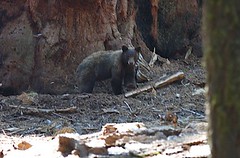
Socially learned foraging behaviors in wild black bears

ResearchBlogging.orgAndrew Mora offers a review of the Biology department seminar by Rachel Mazur.


The American Black Bear, Ursus americanus, is currently the only species of bear in the state of California. In a fascinating presentation by Rachel Mazur, pictures and videos were used to depict the beauty of these bears in their natural and not so natural environments; the latter being bears foraging for food in developed areas of the national parks including getting food out of trash cans, cars, etc.


DSC_4100.jpgAccording to Mazur, these bears are especially hungry during the months of March and April. During this time, a bear is either termed by Mazur to be a wild foraging bear, which consists of eating grasses, roots, insects from shredding logs etc., or they can be food conditioned bears, which consist of getting their nutrition from developed areas, or humans.


Research by Mazur finds that bears have traits for social learning and the most critical times of a bears learning process is during the first year when they are in constant contact with their mother (Mazur, 2008). Three separate hypotheses were compared to describe how these bears are learning to become food-conditioned to developed areas. The first is that bears inherit these behaviors from their mothers and can be predicted (Mazur, 2008). The others include bears learning individually (that is, without the help of the mother) and transmitted learning from sow to cub (Mazur, 2008).


The methods used for this experiment were efficient in that homogeneity was taken into consideration. Therefore five variables were taken into consideration including park, sow identity, sow behavior, rearing method and cub outcome (Mazur, 2008). The two national parks which Mazur encouraged everyone to visit include Sequoia National Park and Yosemite National Park. From showing clips of a movie on this research, it was evident that many years of hard work by numerous staff was done to work with these bears and monitor their statuses.


Mazur stated that she was very pleased with the results that they came across. An easy to read table of her results shows the number of sows that they started with (23 food conditioned and 9 wild), the rearing methods of these sows (rearing in wild or food-conditioned rearing), and the outcome of the cubs once separated from their mothers (Mazur, 2008).


Conclusions made by Mazur asserted that rearing method had a highly significant effect on the cub outcome (Mazur, 2008). If a cub was reared food-conditioned, it was much more likely to be food-conditioned once separate from its mother. That being said, the last hypothesis stated by Mazur was seen to be the most accurate: that bears become food-conditioned through social learning.


In both seminar and paper, Mazur stated that there are numerous implications for the work that has been done. She posed a question to the room regarding the bear’s possibility of creating culture and even tradition in our national forests with these new food-conditioned characteristics (Mazur, 2008). What I found beneficial in this work is the implication that food-conditioning in developed areas in our national forests do not necessarily imply adaptive strategies of these Ursus americanus, but may very well be falling into an ecological trap (Mazur, 2008). I also found it interesting for her to note that science and management have recently become less taboo as a pair in the scientific world.


Reference:


R MAZUR, V SEHER (2008). Socially learned foraging behaviour in wild black bears, Ursus americanus Animal Behaviour, 75 (4), 1503-1508 DOI: 10.1016/j.anbehav.2007.10.027


Read More...

Friday, October 24, 2008

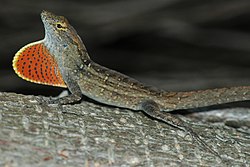
Lizards Showing Some “Leg”

ResearchBlogging.orgSubmitted by Cindy Hua for Evolution


Most of us think that evolution in species take several generations to thousands of years to occur. However, how about if I say in one generation’s time there is a significant change in morphology? Jonathan Losos and his team of researchers from Washington University, St. Louis has found a peculiar lizard that is evolving in a tremendous rate. The brown anole, a Caribbean native lizard, spends most of its day hunting on the ground. One of its main predators is the curly-tailed lizard.

As we all know from our evolution class, a chain of islands sets up a great opportunity for parent species to change significantly. Since the Bahamas are home to the brown anole, natural selection will most likely to occur if there is a change in predator population. Losos has tested his hypothesis that with the introduction of more curly-tailed lizards into the main island, the brown anoles are under the influence of selection pressure change (Losos, et. al, 2006). When brown anoles sense danger of increasing populations of curly-tailed lizards, it flees towards trees and stay away from the ground activities for a few generations.


After a year’s experiment, Losos discovered that the brown anoles are experiencing a change in leg morphology. In the first six months of his study, the anoles originally had long legs, which enable them to outrun the predators. However, six months later, the survivors had drastically shorter legs, which permit them to hide in narrow crevices and climb in trees. Losos noticed that within a single generation, the anoles went to quick reversals in selection pressure (Losos, et. al). The behavior of the lizards changed, as they prefer treetops than the ground. Here we see natural selection at its finest.


Over several generations down, the continuing threat of curly-tailed lizards will force the anoles population to evolve shorter and shorter legs. However, I find it hard to believe that brown anoles can evolve in one generation at such a fast pace. Perhaps through time the longer legged anoles died off and Losos found mostly shorter legged since it was able to survive and reproduce.


The quick reversal of evolution by means of selection pressure is quite interesting. The brown anoles started with long legs to outrun its predators but discovered it to be a hindrance as it cannot bend its legs to hide in crevices. It preferred to have shorter legs to save energy and it is easier to live in trees away from the main predator. The anoles do not have a use of long legs anymore so it does not have to evolve back. For example, ostriches, emus, and kiwis all are flightless birds yet they have small wings. Their ancestors were flying species, but, through time, with fewer predators to run away from, they probably foraged on the ground more. Over generations, they most likely could adapt better on land and did not need developed wings for flight. That is why they evolved long, strong legs for running and scratching for food. I believe this is similar to what is occurring to the brown anoles. Their ancestors must have evolved longer legs to run away from predators. however, current species reverted to shorter legs when selection pressure changed. Although I believe the leg lengths did change because of pressure, I find it hard to believe this had all occurred in one generation.


Reference:


J. B. Losos, T. W. Schoener, R. B. Langerhans, D. A. Spiller (2006). Rapid Temporal Reversal in Predator-Driven Natural Selection Science, 314 (5802), 1111-1111 DOI: 10.1126/science.1133584


Read More...

Development and Divergence of Canid Morphology, A Critical Review

ResearchBlogging.orgSubmitted by Tara Clever for the Evolution class.


When considering the comparison, it is astonishing that toy poodles belong to the same family as wolves: Canidae. Even more interesting is the observation of the divergence of domestic dogs from wolves. Robert K. Wayne approaches this topic with his paper “Limb Mophology of Domestic and Wild Canids: The influence of Development on Morphologic Change.” His primary objective was to determine whether allometry as an index of development and function is the same in domestic and wild canids. (Wayne 1986)

Bivariate Analysis


Domestic dog breeds have wider long bones than their wild counterparts of the same femur length. When comparing relative long bone width, there was little difference between domestic dogs and wild canids. Metapodial, scapula, and olecranon length difference were ovbious between dogs and wild canids. Long bone width and development reflect that fact domestic dogs do not need to hunt or escape predation.


Discriminate Analysis


General size of all canidae family members, domestic and wild, was analyzed to determine similarity of morphologic patterns. Despite diversity in limb size and proportion, domestic dogs are highly distinguished from all except wolf-like canids. Morphologic separation of wild canids among each other and of domestic dogs and wild species depends on difference in metatarsal and olecranon morphology. This suggested that morphologic evolution abides by phylogenetic boundaries (Wayne 1986).


Ontogenetic Analysis


Similarity of dog-intraspecific and dog-ontogenetic analysis showed that small dog breeds are paedomorphic whereas large dog breeds are hypermorphic. This assumes that diversity of limb diversity is predetermined and reflected in the development of an individual as breeders artificially select domestic dogs for favorable traits.


Conclusion


Wayne’s study indicated that allometry can be utilized as an index of devlelopment and function in both domestic dogs and wild canids. Morphological and bone differences were apparent amongst all members of the canidae family. However, some differences were not as distinguishable between domestic dogs and closely related wolves. As domestic dogs are bred for entertainment value, these differences will become more apparent.


Literature cited


Wayne, R. K. (1986). "Limb Morphology of Domestic and Wild Canids: The influence of Development on Morphologic Change." Journal of Morphology 187: 301-319.


Read More...

Thursday, October 23, 2008

Cellular scaling rules and primate brains - revisited

ResearchBlogging.orgKelsey Faria blogs about a paper, earlier reviewed here, for her contribution to the Evolution class.


The order of Primates is known for a variety of species that are energetic, inquisitive, social, and intelligent. Whereas the order of Rodentia typically lack the range or number of skills that primates encompass. Theses differences seem to put these two orders in completely different categories, although species in each order have relatively similar brain sizes. So the question arises what could be different about their brains that it affects their behavior? The question raises the possibility that primate brains differ from rodent brains in their cellular composition (Herculano-Houzel et al 2006).


The authors examined the cellular scaling rules for primate brains and show that brain size increases isometrically as a function of cell numbers. This isometric function is in contrast to rodent brains. Rodent brains have the ability to increase faster in size than in numbers of neurons. As a result of the linear cellular scaling rules, primate brains have a larger number of neurons than rodent brains of similar size (Herculano-Houzel et al 2006). In all probability this would give primates an advantage over the rodents which may explain the richer behavioral repertories and better cognitive abilities (Herculano-Houzel et al 2006).


Brain size fluctuates across mammalian species, and several studies have focused on finding any shared regularities behind brain morphology and cellular composition across species with different brain sizes. With these regularities this leaves room to discover new hypothesis about the underlying development and evolution of the brain. Studies have proven that animals from different species differ in their behavioral repertoires, and one would assume differences in cellular composition of the brain


The authors conducted an analysis in which cellular scaling rules were applied to rodents and primate brains. They concluded that the average neuronal size is larger in larger brains, whereas the average non-neuronal cell size remains comparatively stable. They also discovered that the neuron ratio increases with increasing brain size (Herculano-Houzel et al 2006).


With the information collected through this analysis the authors were interested in applying the scaling rules to other mammalian orders. There main goal was to set rules that can be applied to all brains and possibly reflect characteristics from a common ancestor which would conclude why there is a phylogenetic variance across orders. They were particularly interested in cellular scaling differences that might have arisen in primates. If the same rules relating numbers of neurons to brain size in rodents also applied to primates, a brain comparable to ours, with approximately 100 billion neurons, would weigh approximately 45 kg and belong to a body of 109 tons, about the mass of the heaviest living mammal, the blue whale (Herculano-Houzel et al 2006).


Inevitably their study indicates that there must be scaling differences between rodent and primates due to their behavior relative to similar brain size. The authors used the isotropic fractionators, which is a non-stereological method, which estimates the total number of neuronal and non neuronal cells in the cerebral cortex, cerebellum, and remaining structures of the brain (Herculano-Houzel et al 2006). They examined across six species of the order Primata, from Callithrix to Macaca, and in the closely related tree shrew, which is in the order Scandentia.


From the results gathered the authors concluded that the cellular scaling rules for primate brains differ from those of rodents. There was a distinct difference between the primate brains and rodent brains, primate brains do not hyper scale as they gain neurons, as rodent brains do. Primate brains also increase in size according to their number of neuronal cells which means that the average neuronal cell remains constant. The rodent brains increase in size faster than they gain neurons, which results in a increasing in the average neuronal cell size. When looking at neuronal densities they remain stable in primates and they tend to decrease in rodent brains. Primate ratios of non-neuronal neuronal cells to Mbr (brain mass) do not correlate although rodent’s ratios do.


The authors also included the tree shrews included in the experiment did not alter the results. Therefore the tree shrews are in fact a close relative of the primates and they to conform to the primate scaling rules.


Some implications for humans according to the data are that larger brains do not have a larger relative number of neurons in the cerebral cortex. From their results both the cerebral cortex and the cerebellum represent fractions of brain mass but do not differ significantly with an increase in brain size. Although, relative cortical size is seen to increase significantly with increasing brain size when larger species, such as great apes and humans, are considered (Herculano-Houzel et al 2006). It will be interesting to see if these scaling rules will apply if and when the addition of apes and humans are included in the experiment. A primate brain containing 100 billion neurons would be expected to weigh about 1,450 g and belong to a body of 72.7 kg, values that match the average mass of a human’s brain and body. This would conclude that humans and their brains are in fact isometrically scaled up versions of a common primate plan (Herculano-Houzel et al 2006).


Reference:


Suzana Herculano-Houzel, C. E. C., Peiyan Wong, and Jon H. Kaas (2006). "Cellular scaling rules for primate brains." Proceedings of the National Academy of Sciences 104(9): 3562–3567. doi: 10.1073/pnas.0611396104.


Read More...

On glaciations, climate change, and pleistocene isolated fish

ResearchBlogging.orgRaj Kotagiri offers his perspective on a Biogeography class discussion.


This is a review of our discussion several weeks ago about the Glaciation and Pleistocene periods. There were four major periods in the history of Earth during glaciation period and probably the most important of these is the second period that occurred some millions of years ago between 850 Ma to 635 Ma during the late Proterozoic Age. It was suggested that during this age Earth was covered completely in ice and then led to the Cambrian Explosion which has been responsible for diversification of multi-cellular life during this era.


The current period of constant glaciations in Pleistocene epoch from 1.8 million years to 10,000 years BP where the present continents were positioned and the plates on which these continents rested have not rotated more than 100 km since the start of this period. Repeated glacial cycles have described the climate of Pleistocene period pushed to 40th parallel in some places. 30% of the surface of the Earth has been covered by ice at its highest extent. Also, there was a zone of permafrost that extended from southern edge of glacial sheet of North America to Eurasia. The average annual temperatures of the ice and permafrost were -6˚C and 0˚C respectively.


One of the papers we discussed in class was “Global heat budget, plate tectonics and climate change” (Harris, 2002). This paper stimulated curiosity and discussion among the students in class. We arrived to the following conclusions about climate change on Earth from the paper and discussion.


  1. The Earth’s surface temperature has fluctuated since past 2000 Ma.
  2. Individual locations on Earth have undergone long-term change in temperature at different times and in different places.
  3. We discussed new evidences concerning the difference in heat absorption by land and water; such as, the transport of excess heat pole ward from the tropics and the change in distribution of land and sea resulting from plate tectonics. These evidences explain the major fluctuation in the geological record-setting temperatures measured during last 350 Ma. However, these evidences create confusion since they are not supported by sufficient background data.
  4. he paper also dealt with various controls which resulted in the climate change on the Earth’s surface.
    1. First control dealt with changes in the distribution of land and sea due to plate tectonics. This explains the major temperature fluctuation (>25˚C) around the globe in the last 350 Ma.
    2. Second order control was large scale changes in ocean currents and thermohaline circulation (15-25˚C).
    3. Third order control was Milankovitch orbital cycle producing variations in the air temperature by order of 10˚C.
    4. Fourth order control was massive volcanic eruptions and how changes in carbon dioxide production caused minor perturbations (<5˚C).

The take home message of our discussion was: the Earth's climate change was influenced by many factors; some of which act independently, while others acted interdependent with each other. The process of climate change was a gradual process which took many millions of years to see any significant change in climate. This change in temperature and climate, at different locations of the Earth, resulted in the geological distribution of various types of habitats on Earth.


The second paper we discussed in class was “Pleistocene isolation in the northwestern pacific marginal seas and limited dispersal in marine fish, Chelon haematocheilus (Temminck and Sclegel, 1885)” (Liu et al, 2007). This paper deals with three marginal seas: the Sea of Japan, East China Sea and South China Sea. During the period of Pleistocene glaciation when the whole earth was mostly covered by ice, the populations of living organisms were isolated in the seas.


We discussed the hypothesis that the rise of post glacial sea level resulted in the homogenization of the population by high disperse potential. To test this hypothesis, researchers used Chelon haematocheilus as the model organism. This fish belongs to the Mugilidae family, and is present in shallow coast water as well as freshwater regions in north Japan through the Korean Peninsula, and to the coast of China South. The early life history characteristics indicate that potential larval dispersal of C. haematocheilus is high. If C. haematocheilus larvae could travel on the currents, the connectivity should be high among populations within this region. The distribution and biological characteristics of C. haematocheilus make it a good subject to test the homogenization hypothesis.


Molecular analysis revealed three lineages which might have diverged in the three marginal seas during Pleistocene low sea level. Analysis of molecular variance and population statistics revealed significant differences in genetic structure among populations of the marginal seas. The outcome of the above analysis revealed that gene flow in C. haematocheilus is far more restricted spatially than predicted by the potential dispersal capabilities of this species. These results provide evidence for strong genetic divergence among these fishes in the marginal seas of the Northwestern Pacific, which coincides with expected pattern of vicariance due to sea level changes during the Pleistocene.


In order to support the above hypothesis further investigation should be done on other species of the same region.


Stuart A. Harris (2002) Global Heat Budget, Plate Tectonics and Climatic Change. Geografiska Annaler. Series A, Physical Geography, 84:1-9


JIN-XIAN LIU, TIAN-XIANG GAO, SHI-FANG WU, and, YA-PING ZHANG. (2007) Pleistocene isolation in the Northwestern Pacific marginal seas and limited dispersal in a marine fish, Chelon haematocheilus (Temminck & Schlegel, 1845). Molecular Ecology 16:275-288. DOI: 10.1111/j.1365-294X.2006.03140.x


Read More...

Thursday, October 9, 2008

Loss of Diversity

ResearchBlogging.orgMichael Rosenzweig’s article predicts our planet’s future loss of diversity. He argues that by decreasing the area available for wildlife, it not only decreases habitat, but also actually causes a decrease in the rate of speciation for all organisms. Essentially, his argument rests on how the size of a species range affects its rate of speciation. Although somewhat controversial, large range sizes are thought to have higher rates of speciation as well as lower rates of extinction, and Rosenzweig’s article looks at the other end of that equation. With habitats decreasing, range sizes must decrease as well and that in turn depresses the number of future new species. Eventually this leaves us with fewer and fewer species of life forms.


So where does this leave us? Rosenzweig acknowledges that due to the reality of human population needs large productive areas of landscape may not be able to be set aside solely for wildlife. He proposes a new paradigm of comprise he terms Reconciliation Ecology, which he describes as the modification of human habits and habitats to accommodate species diversity. His solutions often require complex relationships between government, business and the private sector. While, when possible, conservation of land for wildlife is often the best solution Reconciliation Ecology provides a new framework to increase habitat that is accessible to both humans and other species. Accordingly, this would provide larger habitat ranges for species, which, in turn, would cause a decrease in the loss of speciation.

Rosenzweig sees this as a win/win solution, which happens to be part of the title of one of his books on the topic. While some might argue, myself included, that it seems more like a win for us and a lose, although less of one, for wildlife. Many environmentalists, and others, want more and more lands set aside for pure conservation and see Reconciliation Ecology as a sell out. I can see their reasoning, however, I also think they may be missing an important point. The key word in his proposal is “compromise”. I believe he intended his idea would be a way that would take land that humans need for whatever purpose and try to make as many accommodations we can to allow it to be somewhat useful habitat. Those areas would most likely not be available for traditional conservation. That being said, I think the label sell out doesn’t quite fit, however, I’m not sure I would call it a win/win solution either.
Reference:
M. L. Rosenzweig (2001). Loss of speciation rate will impoverish future diversity Proceedings of the National Academy of Sciences, 98 (10), 5404-5410 DOI: 10.1073/pnas.101092798

Read More...

Of squirrels and conifers coevolving

ResearchBlogging.orgA review submitted by Jordan Anderson for the Evolution class.


The feeding preferences of pine squirrels (Tamiasciurus) on conifers lead to two separate patterns of evolution; one of divergence and one of convergence. Squirrels first forage indiscriminately, and then switch to discriminate feeding when supplies run short. This causes selective pressure on the species that is least easily used and results in divergence (Smith, 1970). This selection also produces a divergence between the two tree species in regards to defense mechanisms, such as early shedding of seeds. An example of convergence results, when part of the prey is temporarily inaccessible to the squirrels, thus resulting in energy withheld. Squirrels tend to feed the most on individual trees that are different from the rest in that they are producing more cones, or more seeds per cones (Smith 1970).


The study conducted by Smith took place in the Cascade Mountains of southwestern British Columbia, which is significant, because the Cascade Mountains create a rain shadow with the forests to the east being very dry and prone to burning. In this area, lodgepole pines are ubiquitous and their cones are serotinous, they remain closed for years after maturation to enable them to reseed areas after frequent burns (Smith, 1970). Douglas-firs are also common in this area and will alternate between years of crop failures and years of crop masts; large production. The squirrel population in this area is very stable, they first feed on Douglas-firs but switch to lodgepole pines during crop failures (Smith, 1970). The lodgepole pines serve as a nearly constant food source. On the west side of the Cascade Mountains, the situation is quite reversed. Lodgepole pines are rare, are nonserotinous, and may have cone crop failures (Mowat 1960). This results in a fluctuating squirrel population exerting less selection pressure on lodgepole pines, as they do not exploit as much of the cones. The squirrels in the east exert a selection pressure for harder lodgepole pine cones, and less seeds per cone in the Douglas-firs. Thus, the lodgepole pines exert a selection pressure for squirrels with stronger jaws, those that can eat the stronger cones (Smith, 1970). This change in squirrels is evident as the squirrels in the east have stronger jaw muscles than those in the west.


Another study, explored other information of populations of red squirrels Tamiasciurus, and found that they are territorial. An individual will have its specific area that it maintains year-round. The individual will forage in autumn to assemble a cache of food items. The cache will be located near the center of the individuals’ territory (Larsen et al, 1997). During periods of shortage, squirrels depend on cached food (Vander Wall, 1990). The squirrels will leave their midden to forage on their territory only if the environment happens to be milder on that particular day (Larsen et al, 1997). The squirrels are then foraging the cones that still remain on the trees. Unfortunately, winter foraging does have some drawbacks. It may be more energetically costly to forage than to feed on the food already stored in their midden. It also increases the risk of predation (Larsen et al, 1997).


A study conducted by Lindsay inadvertently tested Smith’s hypothesis about squirrel size relative to cone morphology or cone anatomy. More specifically, Lindsay tested whether squirrel size was influenced by pressure in maintaining efficiency within foraging for a cone cache. He observed that changes in cone morphology selected for squirrel size (Lindsay, 1986). Small squirrels were found in areas dominated by spruce, hemlock, and redwoods (all of which have small cones with little energy per cone). Conversely, large squirrels were found in forests that had larger cones with a greater energy per cone (Lindsay, 1986). His study showed that discriminatory feeding tactics based on the individuals’ size could minimize loss of energy from the food source as they became more efficient in handling time. Efficiency, was calculated by measuring the amount of energy in a particular food while taking into consideration the energy used to process the food. This relationship is noted by Palmer, who expressed the total energy as “net energy” with the energy lost in processing known as “handling time.” Thus, minimizing handling time is a highly efficient tactic for feeding discrimination and efficiency (Palmer, 1981). This is particularly applicable to squirrels, because they need to obtain lots of energy to store up for winter; they need to be efficient in their foraging techniques in order to survive.


Lindsay noted more evidence in support of Smith’s research by observing T. douglasii in association with small cones. This makes sense as douglasii has weak jaw muscles and can manipulate the smaller cones. T. hudsonicus was found in association with large, thick cones, suitable for hudsonicus as it has strong jaw muscles (Larsen, 1986).


I found Smith’s experiment to be exceptionally thorough. This is evident by many authors who have cited Smith’s work within their own studies. However, he was unable to discern if any animal was exerting a selection pressure to maintain thick seed coats (as a defense mechanism by the conifers). I have not yet found an article exploring this important topic. More research needs to be conducted to discover if insects or birds are inhibited by the thick seed coats of ponderosa pine, western white pine, and Douglas-fir (Smith, 1970). If animals are selectively choosing seeds with a thinner coat, then they are creating a selective pressure for the conifers to produce a thicker seed coat in order to escape predation.


References:


K. W. Larsen, C. D. Becker, S. Boutin, M. Blower (1997). Effects of Hoard Manipulations on Life History and Reproductive Success of Female Red Squirrels (Tamiasciurus hudsonicus). Journal of Mammalogy, 78 (1), 192-203


S. L. Lindsay (1986). Geographic size variation in Tamiasciurus douglasii: Significance in relation to conifer cone morphology Journal of Mammalogy, 67 (2), 317-325


E. L. Mowat (1960). No serotinous cones on central Oregon lodgepole pine Journal of Forestry, 58, 118-119


A. Richard Palmer (1981). Predator Errors, Foraging in Unpredictable Environments and Risk: The Consequences of Prey Variation in Handling Time Versus Net Energy The American Naturalist, 118 (6), 908-915 DOI: 10.1086/283883


Christopher C. Smith (1970). The Coevolution of Pine Squirrels (Tamiasciurus) and Conifers Ecological Monographs, 40 (3), 349-371 DOI: 10.2307/1942287


Wall, V. 1990. Food hoarding in animals. University of Chicago Press.


Read More...

Monday, September 15, 2008

The Eye!

Tina Sakha (from Biol 105) shares this video about the evolution of the eye. Here's her summary: The Eye is designed to create images by focusing light into the retina, and sending the signal to the brain. 540 million years ago, the eye had nothing more than photoreceptive patches. It becomes concave but there is very little directionality. In the beginning the eye wasn't concave enough, though it evolved into more concave shape as time passed. Pinhole camera eyes allow for greater directionality. The cornea develops over the eye, as well as a fluid called humour to protect the eye from damage. A lens develops to focus the light, and providing even greater directionality.

If you are in the habit of watching the History Channel (and who isn't?) you might have caught their recent hour-long treatment of the evolution of the eye, which opened their ongoing series "Evolve". Recent episodes of the series are available for viewing online on their website, and you can find older ones, including the one on the eye on iTunes.

Read More...

Sunday, September 7, 2008

Life, The Universe, and Everything Else...

ResearchBlogging.orgJennie Talbot shares her musings following the class discussion last week in Biogeography (Biol 275).

In class we discussed the idea that niches are places that supply a particular organism with all of the resources required for it to thrive. The discussion led to questions regarding how much the niche impacted the species and, in turn, how much the species impacted the niche. For example, a plant species may thrive on the side of a mountain because it is here that the plant can find soil with good nutrients, adequate sun light, and reasonable temperatures. However, as more and more plants colonize the side of the mountain, transpiration will occur at a higher rate, which will produce more moisture in the air and, ultimately cause more rain to fall. The plant’s root system will hold the nutrient-rich soil despite all of the rain. Animals may come and feed on the well-nourished plants and, in turn defecate onto the soil, adding more nutrients for the plants to use. As more and more plants grow in this favorable environment, it is likely that the side of the mountain will get more rain then it did before the plants migrated to this location. Likewise, the side of the mountain may have better soil because of the wildlife that eat the plants. In fact, the wildlife may migrate to this newly colonized region on the mountainside because of the resources available. Therefore, the cycle will continue with more rain, better soil nutrients, healthier plants, and new wildlife. In this way, the side of the mountain, which may at one point have been completely void of life, has become a bustling habitat for multiple species.


So then I have to ask the question, “Was earth created for life or did life mold the earth into what it is today?” Of course, people may say, “Yes, the earth was created for life.” Well, Harold C. Urey submits that the earliest atmosphere of earth was composed mostly of hydrogen, methane, and nitrogen with only trace amounts of other elements such as carbon and oxygen. Over time a bunch of chemical reactions occurred (if you want to know all of the reactions, read Urey’s paper) and the earth’s atmosphere changed from being predominantly hydrogen and methane based to being highly oxidized with a lot of free energy created from oxidation reactions. The available free energy made it possible for a few primitive organisms to thrive. From here on out, those small organisms began to colonize earth. Current literature suggests that heterotrophic cells evolved 3.5 billion years ago followed by autotrophic cells (somewhere around 2.7 billion years ago), eukaryotes (2 billion years ago) and then multicellular organisms (Kardong, 2005). Because of the newly formed organisms on the planet, compounds that the earth had not seen yet (like isotopes of sulfur) were made and the compounds that were available already could be molded into something that could be used by another organism (Urey, 1952; Kasting, 1993).


So what does all of that mean? It seems to me that when the earth was created, it was completely uninhabitable. Which may mean the earth was not created for life and it is because of life, that the earth is habitable now. When the earth first came to be, there were atmospheric elements that began to interact with one another. From this energy was released, organic molecules were formed and the genesis of life began. At this point in the story, organisms have done nothing to alter the earth. However, with the birth of the first autotrophic cells (and the use of photosynthesis), living organisms began to transform the earth into something that could sustain life. Since then life has molded the planet into what it is today. Of course, it is likely that life has not molded the entire planet (as in, I am not sure that living organisms have any impact on the core of the planet itself…but this is science, so you never know, something could be discovered ☺) and who knows about our impact on the entire solar system. Nevertheless, in terms of niches within our range of exploration on the surface of the earth, it seems that living organisms can have a drastic, sometimes detrimental, impact on their habitats. Image what the world would look like if there was no deforestation or animal poaching. Imagine if the mosquitoes that bite us incessantly were not provided with stagnant water supplies in the rims of old tires and so could not reproduce in new habitats and spread deadly diseases to the inhabitants of those places. What if plumes of dinoflagellates did not blanket the ocean and poison thousands of fish each year. What if asparagus seeds did not float on water? What if fungus did not decompose leaf litter on the forest floor? What would the world look like without millions of species changing the world into a place called home?


Okay, so the end of that paragraph was a little cheesy. But truly, without life shaping the planet what would the planet look like? From these thoughts, I believe, at least for now, that living organisms have morphed the earth into what we know today. Without life on this planet, the earth would look completely different.

Sources


Kardong, Kenneth V. 2007. An Introduction to Biological Evolution. 2nd ed. Boston: McGraw-Hill Companies, Inc., 49-54.


J. Kasting (1993). Earth's early atmosphere Science, 259 (5097), 920-926 DOI: 10.1126/science.11536547


Harold C. Urey (1952). On the Early Chemical History of the Earth and the Origin of Life Proceedings of the National Academy of Sciences, 38 (4), 351-363


Read More...

Thursday, September 4, 2008

Aquatic macroinvertebrate responses to drought

ResearchBlogging.orgA critique submitted by Brett Moore for the Evolution class.


Aquatic macroinvertebrates have received and are continuing to receive considerable amounts of scientific attention. The large amount of diversity within macroinvertebrates allows them to be present in almost all natural freshwater environments (Resh and Rosenberg 1984). The evolutionary adaptations that created the diversity within the group also created the great variety of life histories and physiological requirements, which promote the use of macroinvertebrates in scientific studies and biomonitoring, the use of living organisms and their responses to measure the quality of the environment, (Merritt et al 2008).


Ecosystem disturbances, whether anthropogenic or natural phenomena such as drought, can create changes in aquatic macroinvertebrate communities by altering habitats and the physiochemical conditions they have adapted to live by. Thus, disturbances can have a large effect on the community structure of aquatic biota. However, many studies have shown that even after a single event disturbance that does not chronically alter habitat, such as a drought and the drying of aquatic habitats, aquatic macroinvertebrate taxa richness can make a rapid recovery (Boulton 2003, Wallace 1990). The fast recovery is most likely the result of the evolutionary history of drought in aquatic environments (Boulton 2003).


Boulton and others have done several studies addressing the effects of drought, drying, and intermittent streams on aquatic macroinvertebrates. In Parallels and contrasts in the effects of drought on stream macroinvertebrate assemblages, Boulton observed the effects of drought as an intermittent stream disturbance and the ecological changes that occurred. As riffle habitat dried and the stream turned into isolated pools, species assemblages changed favoring the species more adapted for lower oxygen levels, higher temperatures, and predation on other invertebrates. When flow commenced recovery of the species assemblages began to take place. Recovery rates were rapid for species that had strategies for surviving drying. Two main strategies were identified: 1. Species were adapted for finding refuge. 2. Species had a life history strategy for dry conditions (Boulton 2003). Strategies for finding refuge include being mobile, or being able to bury into damp substrates, while some life history strategies to survive dry conditions include having a terrestrial winged adult stage of the species existent during dry conditions, having desiccation resistant forms of eggs, or having tendencies for downstream drift once flow commences (Boulton 2003, Wallace 1990). Therefore, immobile invertebrates without life histories to survive drying should be heavily effected and take longer to recover from a stream drying disturbance. Several studies have been able to show this. For example, mollusks, which do not have a winged adult stage and are fairly immoblie compared to other invertebrates, have been shown to be among the last taxa to recover following disturbances (Wallace 1990).


Boulton (2003) acknowledges the linkages between the history of drought and the evolutionary adaptations of aquatic macroinvertebrates. However, there are still information gaps and questions that need to be answered. Boulton states that most of the data that exists about the effects of drought on aquatic biota is short term, and the lack of pre-impact data exists because studies are opportunistic and droughts are phenomenological events. Understanding the life histories, life cycles, behaviors, and the genetic structure of aquatic macroinvertebrates is also extremely important, however much of the information is still poorly known. Also, several questions still need to be clarified or answered such as: Does frequent drying select for life histories and certain community assemblages? Do the same responses occur across most geographical regions (Wallace 1990)? Once more information becomes available about the evolutionary adaptations of aquatic macroinvertebrates science may have a better understanding of evolutionary processes and what may happen to biota in the future if global climate changes occur.


Literature Cited:


Andrew J. Boulton (2003). Parallels and contrasts in the effects of drought on stream macroinvertebrate assemblages Freshwater Biology, 48 (7), 1173-1185 DOI: 10.1046/j.1365-2427.2003.01084.x


Merritt, R. W., K.W. Cummins, and, M.B. Berg (eds.). 2008. An introduction to the aquatic insects of
North America
, 4th ed. Kendall/Hunt, Dubuque, Iowa.


Resh, V.H., and D.M. Rosenberg (eds.). 1984. The ecology of aquatic insects. Praeger
Publishers, New York, NY.


J. Bruce Wallace (1990). Recovery of lotic macroinvertebrate communities from disturbance Environmental Management, 14 (5), 605-620 DOI: 10.1007/BF02394712


Read More...

ShareThis

Darwin's tweets

Recent ScienceBlogs Posts on Peer-reviewed Papers

Current Readers

counter

  © Blogger template Brooklyn by Ourblogtemplates.com 2008

Back to TOP