Showing posts with label science. Show all posts

Wednesday, June 16, 2010

Evolving Thoughts on Homology


Accompanying the above intriguing illustration, John Wilkins has written a really good essay on the concept of homology, which we are taught (and go on to teach) as a really basic concept in evolution, but has surprising ambiguities and potential circularities (not unlike a few other evolutionary terms I can think of). John very helpfully traces some of the history of the term, and how its application has evolved as we've become better at building and testing phylogenies as hypotheses of evolutionary relationships. I have to agree with him when he says:
The notion of homology is complex, and as we recently saw when I asked about the use in mathematics, it has a slew of other meanings, but the one that seems to me to be consistent across all uses is this: a homology is a mapping or “agreement” of parts of organisms with other parts of organisms. A mapping relation is not a similarity, and it is not the explanation of the relation (such as evolutionary common ancestors, which are proposed to explain the homology). It is an identity relation: this is the same as that. The identity may be an identity of place, of sequence, of developmental process, or just of a shared name, but what it is not is similarity or common ancestry. Similarity may be how we identify homology (and what kinds of similarity depends on what we use), and common ancestry may be how we explain homology, but in both cases homology is the relation itself.
You know you'll be reading the rest of that essay for sure if you are in my class the next time I teach Evolution!

Read More...

Thursday, June 10, 2010

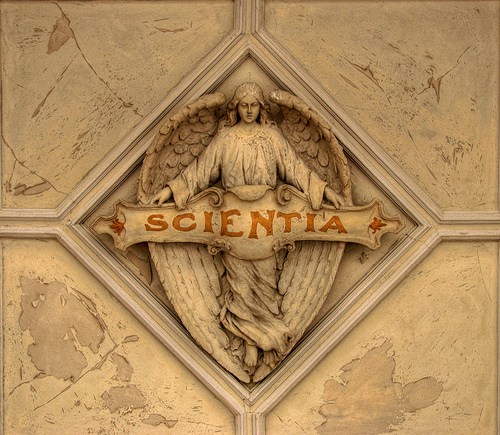
Biology Overload in the latest Scientia Pro Publica

I know I'm not always diligent about noting blog carnivals here, even when my postings are part of a carnival! Can't promise I'll be consistent about that in the future either. But if you are looking for some good science writing to read this summer, you could do worse than reading the weekly roundup in the Scientia Pro Publica carnival, which I have hosted in the past, and try to contribute to when I can. You'll find this week's edition, which came out on June 7, at The Dichotomous Trekkie 2.0, with an overload of biological posts! What fun! And it even includes my recent rant about evolution not being a ladder. So what are you waiting for? Go visit the carnival now!

Read More...

Friday, May 28, 2010

The news is often full of poop, but how often do you see a real poop expert on the news?

Visit msnbc.com for breaking news, world news, and news about the economy

Another reason to love Rachel Maddow - her priceless moments of geek!

Posted via web from a leaf warbler's gleanings

Read More...

Thursday, May 6, 2010

You gotta read between the lines in scientific papers to find these!

Read More...

Wednesday, May 5, 2010

RIP, Devra Kleiman, another sad loss to conservation biology

I just learnt of another sad loss to the field of conservation biology: Dr. Devra Kleiman of the Smithsonian National Zoo. I first heard of Dr. Kleiman when learning about captive breeding as a conservation strategy back at the Wildlife Institute of India some 20 years ago. In fact, if I remember correctly, Dr. AJT Johnsingh, our mentor there, knew her from his postdoctoral stint at the Smithsonian, and had some stories to share. I later had the fortune of meeting her briefly during a conference / visit to the National Zoo when I worked at the Smithsonian's Conservation Research Center for a short while. A remarkable, energetic, inspirational woman who helped establish the field of conservation biology - and was certainly a role model to young female biologists like my wife Kaberi - she also came across as a warm human being.

Here's an obituary from the Washington Post:
Devra G. Kleiman dies at 67; helped create field of conservation biology
Washington Post Staff Writer
Tuesday, May 4, 2010 
In a career spanning more than 40 years, much of it at the National Zoo, Dr. Devra G. Kleiman helped create and define the new field of conservation biology. 

She was perhaps best known for spearheading an unprecedented international effort to save golden lion tamarins -- small, reddish-orange monkeys that live in Brazil's Atlantic coastal forests -- from extinction. 

In the early 1970s, Dr. Kleiman responded to an alarm sounded by Brazilian biologist Adelmar Coimbra Filho. Golden lion tamarins were in trouble; research showed there were only several hundred of the animals remaining in the wild and fewer than 75 in captivity. Dr. Kleiman and Coimbra helped persuade officials at more than a dozen zoos not to sell their golden lion tamarins for profit. Instead, the zoos would lend the animals to one another for breeding. Eventually they gave up title altogether, ceding ownership to the Brazilian government. Dr. Kleiman played monkey matchmaker, using genetic data to determine which animals should mate to create strong offspring. 

Those offspring were reintroduced to Brazil, where Dr. Kleiman and Coimbra helped preserve and restore wide swaths of the animals' habitat. Today, about 1,600 golden lion tamarins live in the wild. Another 500 live in 145 zoos around the world. The species' status has been changed from critically endangered to endangered, and a Brazilian organization that Dr. Kleiman helped found is coordinating efforts to ensure the species' long-term survival. 

Dr. Kleiman's effort was "one of the greatest success stories in the history of modern zoos," said Steven Monfort, director of the Smithsonian Conservation Biology Institute. "It was the beginning of this revolution of the role of zoos as conservation organizations, instead of just having a place for exhibiting specimens for people to come look at and enjoy." 

The cooperative model Dr. Kleiman pioneered with the golden lion tamarin project has since been widely adopted as the most effective way to manage the genetics of rare species. It has been crucial to the successful reintroduction to the wild of species including the black-footed ferret and the California condor. 

At the same time that she was working with golden lion tamarins, Dr. Kleiman was making headlines for her efforts to breed the National Zoo's first pair of giant pandas. 
Ling-Ling and Hsing-Hsing were gifts from China, arriving at the zoo in 1972. Almost no rigorous research had been conducted on pandas and little was known about their behavior. 

Conventional wisdom held that pandas are solitary creatures, so Dr. Kleiman and her colleagues kept Ling-Ling and Hsing-Hsing apart except for brief annual mating periods. Their enclosure was spartan, a plain yard with one climbing platform. They ate a simple diet of rice gruel and milk. 

The pandas' reproductive results, carefully tracked by the national media, were heartbreaking. Between 1983 and 1989, Ling-Ling became pregnant four times. One baby was stillborn; the others died within hours or days of their birth. 

During the roller coasters of those pregnancies, Dr. Kleiman led a team of scientists who used cameras and trained volunteers to track the animals' behaviors. They wrote some of the first descriptions of pandas' vocalizations, their play, their scent markings and their deportment during mating. They concluded that pandas were social creatures who needed to interact. 

"As I think back to what we didn't know in 1972, it was just about everything," Dr. Kleiman told The Washington Post in 2001. "We were flying blind." 

When the National Zoo's second pair of pandas arrived in 2001, they dined on bamboo, carrots and apples, and they were allowed to play together in a large enclosure studded with sand wallows, ponds and trees. In 2005, the couple successfully produced Tai Shan, the first panda born at the National Zoo to survive longer than a few days. 

"We've gone way beyond where we were," Monfort said, "and Devra set the benchmark." 

'Hooked' on pandas 

Devra Gail Kleiman was born Nov. 15, 1942, in the Bronx, N.Y. She graduated from the University of Chicago in 1964. As an undergraduate, she raised a baby dingo in her apartment one summer and took a part-time job as an assistant on a research project to tame wolves. 

She spent hours in their cages doing crossword puzzles and homework assignments. The experience helped persuade her to forgo a career in medicine and study animal behavior instead. 

She received her doctorate in zoology from the University of London in 1969. After being turned down for one job because "there weren't enough women's toilets," she once said, she became one of the National Zoo's first female scientists in 1972. 

She became head of the Department of Zoological Research in 1979 and the zoo's assistant research director in 1986. She wrote and edited several books, including "Wild Mammals in Captivity," an animal-husbandry handbook and "Lion Tamarins: Biology and Conservation." 

After retiring in 2001, she continued to work on a number of conservation projects and was an adjunct professor of biology at the University of Maryland, a position she had held since 1979. She enjoyed spending time at her vacation home in Chincoteague, Va. 

Her first marriage, to John F. Eisenberg, ended in divorce. 

Survivors include her husband of 22 years, Ian Yeomans of Chevy Chase; three stepdaughters, Elise Edie of Ellensburg, Wash., Joanna Domes of Calgary, Alberta, and Lucy Yeomans of Manchester, England; her mother, Molly Kleiman of Silver Spring; a brother; and four grandchildren. 

When the first pandas arrived at the National Zoo, Dr. Kleiman told The Post in 2001, she was uninterested in studying them. "I thought it was too political and too dominated by public relations," she said. "But I started sneaking in and doing observations on them early in the morning. I got hooked."

Read More...

Sunday, April 4, 2010

Science vs Pseudoscience at Valley Cafe Sci tomorrow night

Folks in the Fresno area: join us tomorrow night at Lucy's Lair (see our website for details) for the April meeting of the Central Valley Cafe Scientifique when Physicist Ray Hall will guide is through the philosophical conundrum of telling good (but fringe) science apart from crackpot pseudoscience! Promises to be a fun evening, no?

Posted via web from a leaf warbler's gleanings

Read More...

Sunday, February 21, 2010

Yet another reason for Israel to become the 51st of the United States of America

For they too have, among the top echelons of their government, "scientists" in charge of public education who do not accept the evidence for evolution or global warming! Wow:
The Education Ministry's chief scientist sparked a furor among environmental activists and scholars Saturday with remarks questioning the reliability of evolution and global warming theory. The comments from Dr. Gavriel Avital, the latest in a series of written and oral statements casting doubts on the fundamental tenets of modern science, led several environmentalists to call for his dismissal.

"If textbooks state explicitly that human beings' origins are to be found with monkeys, I would want students to pursue and grapple with other opinions. There are many people who don't believe the evolutionary account is correct," Avital said yesterday.

"There are those for whom evolution is a religion and are unwilling to hear about anything else. Part of my responsibility, in light of my position with the Education Ministry, is to examine textbooks and curricula," he said. "If they keep writing in textbooks that the Earth is growing warmer because of carbon dioxide emissions, I'll insist that isn't the case."
Now isn't that further evidence of the strong cultural ties between the US and Israel? Doesn't it lend support to the long-argued case for making Israel the 51st state of the US? Further evidence of a shared anathema to science comes courtesy of the NCSE, suggesting that this anti-scientific rot is not limited to the political upper echelons of Israeli government, but may be rather widespread among the general populace as well:
Unfortunately, Avital's views on evolution may be shared by a sizable segment of the Israeli public. A 2006 survey of public opinion in Israel by the Samuel Neaman Institute found that "a minority of only 28% accepts the scientific theory of the evolution [sic], while the majority (59%) believes that man was created by god," while according to the 2000 International Social Survey Programme, a total of 54% of Israeli respondents described "Human beings developed from earlier species of animals" as definitely or probably true, placing Israel ahead of the United States (46%, in last place) for its public acceptance of evolution, but behind twenty-three of the twenty-seven countries included in the report.
And I'm (sadly) gratified to find a shared brotherhood with my biologist colleagues in Israel who find themselves rather unexpectedly having to bat down this kind of inanity.

Read More...

Teach the Controversy - sure... but which one?!

Keep pushing teachers to "teach the controversy" - but you may not like what you get when they do! And this teacher didn't even hit upon my ancestral religion!!

Posted via web from a leaf warbler's gleanings

Read More...

Tuesday, February 2, 2010

The immortal HeLa cells and their source, Henrietta Lacks

ABC World News aired this story last Sunday, which includes a short interview clip with Rebecca Skloot, whose book The Immortal Life of Henrietta Lacks is just hitting the stores. And yes, the woman's name is Lacks - but lame as it seems, the ABC website and video have misspelt it!! The story itself is quite remarkable, and really well told. I will try to post a review of the book here as I'm hoping to finish reading it soon.

Posted via web from a leaf warbler's gleanings

Read More...

Friday, January 29, 2010

Seminar today: Step-by-step evolution of the vertebrate blood coagulation system

Friday, January 29, 2010

3:00-4:00 PM in Science II, Room 109


Professor,

Dept. of Chemistry & Biochemistry and Molecular Biology

University of California, San Diego

La Jolla, CA

The availability of whole genome sequences for a variety of vertebrates is making it possible to reconstruct the step-by-step evolution of complex phenomena like blood coagulation, an event that in mammals involves the interplay of more than two dozen genetically encoded factors. Gene inventories for different organisms are revealing when during vertebrate evolution certain factors first made their appearance or, on occasion, disappeared from some lineages. The whole genome sequence databases of two protochordates and seven non-mammalian vertebrates were examined in search of some 20 genes known to be associated with blood clotting in mammals. No genuine orthologs were found in the protochordate genomes (sea squirt and amphioxus). As for vertebrates, although the jawless fish have genes for generating the thrombin-catalyzed conversion of fibrinogen to fibrin, they lack several clotting factors, including two thought to be essential for the activation of thrombin in mammals. Fish in general lack genes for the “contact factor” proteases, the predecessor forms of which make their first appearance in tetrapods. The full complement of factors known to be operating in humans doesn’t occur until pouched marsupials (opossum), at least one key factor still being absent in egg-laying mammals like the platypus.

Posted via web from a leaf warbler's gleanings

Read More...

Wednesday, January 27, 2010

Genie Scott on Evolution Versus Creationism

This is the second lecture of the course on Darwin's Legacy offered at Stanford in 2008. I posted the first lecture earlier today.

Posted via web from a leaf warbler's gleanings

Read More...

Darwin's Legacy: introduction to a course from Stanford University

On NCSE's Facebook page this morning I discovered a link to this wonderful series of lectures on Darwin's Legacy put together as a continuing education course by Stanford University in fall 2008. I will post the whole series here, since it has recently become available online. Or you can get a jump start and go to the source: watch the whole thing in YouTube videos like the one above on Academic Earth or download it to your favorite portable device by downloading it from iTunes U.

While we don't have Stanford's resources or reach, as you may know, we are nevertheless also hosting our own modest Evolutionary Biology Lecture Series under the umbrella of the Consortium for Evolutionary Studies at California State University, Fresno this year. And as some of you may remember, we had NCSE's Dr. Eugenie Scott speaking on campus last month; she's also featured as the second talk in the Stanford course. This friday we'll learn about the evolution of the vertebrate blood coagulation system from Dr. Russell Doolittle of UC San Diego. Join us if you can, or come back here for videos/podcasts - I will try to record and post as many as I can.

Posted via web from a leaf warbler's gleanings

Read More...

Monday, January 4, 2010

Café Scientifique tonight: Epidemiology of Lung Cancer in the Central Valley

Each year 160,000 Americans die from lung cancer and another 220,000 are diagnosed with the disease. About 85-90% of lung cancer is attributable to cigarette smoking and other tobacco related exposures; however, one in five American adults continue to smoke. Although there has been a decline in smoking during the last several decades, recent national data suggest the decline has leveled off, especially among young adults. In this presentation, the worldwide distribution of lung cancer, state and local patterns of lung cancer will be presented, as well as data on smoking habits and other risk factors for this deadly disease.

For those of you in Fresno tonight - a reminder: the above is the topic for tonight's talk at the Central Valley Café Scientifique by Dr. Paul Mills of the UCSF-Fresno Medical Education Program. And note that we meet at a new venue tonight. Enjoy - even if some of us regulars have to miss it!

Posted via web from a leaf warbler's gleanings

Read More...

Education for the future and the future of education

I'm preparing for what ay be the biggest teaching challenge of my hitherto untenured professorial career: Biology 1B, or Intro Bio (the diversity and evolution edition), the large lower division undergraduate course which (for pre-meds and other non-bio-majors) may be the only time that many of the students encounter the diversity of life on this planet and the mechanism that produced that diversity - Evolution. Teaching evolution in the San Joaquin Valley of California is a challenge, as I have noted before, but I've only done so at the other end of our majors' core sequence - the upper division Evolution class. Students taking that class have, by that time, generally come to terms with evolution, or at least become good at hiding their trouble with it (and don't ask me which I prefer!). I will now experience what its like to teach the E-subject at the lower division level, especially for many students who won't be taking the course to get a biology degree. Should be fun, eh?

Should I tone it down, perhaps even skirt around the E-word as some in this region suggest, to avoid creating conflicts for some students that may impair their learning? Or should I hammer it in, so that those who object to it are "weeded out" to alternative career choices - and perhaps turned more hostile towards evolution? How about, instead, I try to really light a fire of curiosity in their minds so that more of them actually want to learn evolutionary biology in all its glory? Ah... that last is the ideal I'd like to shoot for, but am also most apprehensive about being able to pull off without falling into the second category: appearing to be hammering it in too strongly! But surely, I have to try to excite them about evolution, don't I? For these students are the future pillars of this state and country, so isn't it my duty as a science professor to make sure they get a proper understanding of and appreciation for science, even if - especially if - it pushes them outside their cultural comfort zones and forces them to acknowledge and push beyond the boundaries of their ignorance? More selfishly - some of these kids will become doctors who may treat me in my old age, while others will sit on school boards that determine what my daughters can learn - or not - in their classroom! How can I forgo my one chance of making sure they have the right scientific foundation?

These would be questions keeping me up even ordinarily, but this year they hold a sharper edge, owing to our current circumstances: Caifornia's higher education system is in crisis along with the state's economy, putting a college degree farther out of reach for many; I teach in the California State University system, which is the worst affected among the triumvirate leading the state's higher education; our campus serves one of the poorest regions in the state (perhaps the country) with a high proportion of "minority" students; and I'm told that bad economic times can make people more cautious and conservative - even fundamentalist if you ask at least one evolutionary biologist who recently argued that the ecologically sound way to address the problem of terrorism is to increase existential security for people (I don't buy that - but will defer that argument to another post to avoid a lengthy detour here). Giving students a sound foundation in science - including evolution - therefore becomes more important than ever if we are to collectively pull ourselves up by our bootstraps.

This Sunday's Los Angeles Times had a couple of thought-provoking articles that are pertinent to this discussion and well worth your while, especially if you live in California. First, Professor William Tierney, director of the Center for Higher Education Policy Analysis at the University of Southern California, calls for a brand new master plan for higher education in California since the old master plan (which put the triad of UC-CSU-Community Colleges in charge of public higher education) is outdated and probably past its use-by date. Many points worth thinking about in the article, but one that particularly resonates with me right now is this:

* High school and higher education must be linked to ensure that when students graduate from high school, they are prepared for college.

Tens of millions of dollars are spent each year bringing more than 50% of Cal State students up to speed in math and English, with often negligible results. That kind of waste could be significantly reduced if high schools and colleges agree on what entering freshmen should know and then work together to bring it about. That means, at a minimum, requiring four years of English and three years of math, including algebra.

High schoolers also should be tested to prove they can do college-level work -- not simply to meet high school requirements. If they can't, corrective steps should be taken in high school to overcome their deficiencies. This demands collaborative relationships between high schools and colleges that don't exist now.

This seems like such a no-brainer to me that I'm surprised its been overlooked thus far. So much of what we find ourselves doing in university these days is remedial education that its not funny! My life would be so much easier if the K-12 system didn't just kick the problem upstairs and "graduate" students lacking in basic skills, especially in critical thinking and other fundamentals of science - not just math and English! How much farther would I be able to take these kids if they only came better prepared... oh I can dream!

Second, Dr. Irving Epstein, HHMI Professor of Chemistry at Brandeis University raises broader questions about the science of science education:

At most universities, freshman chemistry, a class I've taught for nearly 40 years, is the first course students take on the road to a career in the health professions or the biological or physical sciences. It's a tough course, and for many students it's the obstacle that keeps them from majoring in science. This is particularly true for minority students.

My intro bio course is another such obstacle, made acute by the "majority minority" nature of our student body.

In 2005, more than two-thirds of the American scientific workforce was composed of white males. But by 2050, white males will make up less than one-fourth of the population. If the pipeline fails to produce qualified nonwhite scientists, we will, in effect, be competing against the rest of the world with one hand tied behind our backs.

We've been able to survive for the last several decades in large measure because of the "brain drain" -- the fact that the most able students from other countries, particularly China and India, have come here to study science at our best universities and, in many cases, have stayed to become key players in our scientific endeavors.

At many top schools, including my own, international students constitute from 30% to 70% of the doctoral candidates in math, physics and chemistry.

This resonates too, for I am an exemplar of this very "brain drain": a non-white immigrant from India who came to this country for graduate school because I was starving for evolutionary biology back in India!

The situation might be tolerable, if embarrassing, were it not for recent changes in world economies and attitudes toward science and education. As a result of dramatically increased investment by other countries in science, the brain drain is not just slowing, it appears to be changing direction.

International students and post-docs are returning to their home countries in much greater numbers after reaping the benefits of an American education, and many who have worked for years at U.S. companies and universities are being lured home by offers of new labs, easy access to research funding and the comforts of their native culture.

And this last part hits even closer to home, as I too experience greater pressure these days to return home to new institutions of higher learning in India. Many colleagues there (and my own spouse here) wonder (aloud) why I have chosen to remain at an institution such as this one where I teach more classes each semester than they have to during a whole year (or two), where research is a "required hobby" that I have to constantly scrape up time for, and where the student body is such a problematic one. How much longer can I stave off these questions and fight the tide of the reverse brain drain? Interesting to be pondering this even as my tenure file makes its way up my university's hierarchy this year, giving me that shot at existential security: what price such personal existential security against an increasingly insecure future? I guess the answer for me will depend on how California handles this crisis (no good omens thus far) - but in the meantime, I still have to address this challenge: 

We need to ensure that American science draws on all of our population, not just selected, and shrinking, segments of it. But how?

Read the rest of Epstein's article, and Abel Pharmboy's commentary on the same at ScienceBlogs for some potential answers. And if you have a better solution, please do share, won't you? Meanwhile, I better get back to writing that syllabus, and preparing my talk for the SICB meeting which just got underway tonight!

Posted via email from a leaf warbler's gleanings

Read More...

Thursday, December 24, 2009

Scientia Pro Publica #18 is out for your holiday reading

028CF91C-54C2-4589-B5AF-CDD794950600.jpegEnjoy your break with some good science readings from the blogosphere in the latest Scientia Pro Publica (issue #18) blog carnival. I posted it yesterday on Reconciliation Ecology, so pop on over there if you haven't seen it already!


And if you have come across any good blog writing on evolution, or written something yourself, consider submitting it to the upcoming Carnival of Evolution, #19 to be hosted at Observations of a Nerd.


Read More...

Tuesday, December 8, 2009

A Christian student reflects on Eugenie Scott's talk about Evolution/Creationism

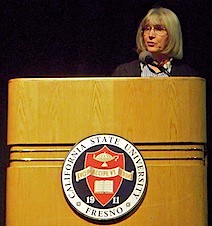
At the podium-3 copyWhat an overwhelming response we had at Eugenie Scott's wonderful lecture last week on "Why the fuss about Darwin and Evolution?"! Thank you, Genie, for such a great talk, for inspiring and recharging those of us in the thick of the evolution/creationism culture war in the Central Valley, for showing us how to address these issues in a graceful, polite, and inclusive manner. And thank you, all of you who came to campus that evening and overflowed the Satellite Student Union. For those that couldn't come that evening, you can still enjoy the talk, in parts via videos posted on Scott Hatfield's blog, and also a full-length podcast of the slides with audio that I'm working on (as soon as classes are out of the way this week!). More on that soon.


For now I want to share an essay written by one of my students who attended the talk, identifies himself as a Christian, and has, starting from a religious background that made him suspicious of the E-word, come around to accept the evidence for evolution, while retaining his faith. I thank Eric York for allowing me to share his synopsis of and reflections on Genie's talk here. Having a standing-room audience is one thing - and a great thing for sure - but a personal testimony from a student who has made some real progress in their thinking because of what we teach, that is the best kind of response we teachers can hope for. Note that I am posting his essay as is, although I have (and you can guess where) some quibbles with a couple of the things he says in his synopsis. You should also read Scott's summary of the talk, which has a bit more on the core-fringe model of knowledge. If you attended the talk, feel free to share your reaction in the comments section below. Here's Eric (continued below the fold):


“Why all the fuss about Evolution?” –Eugenie C. Scott


Eugenie Scott provided a lecture outlining the basics of evolution, followed by a detailed synopsis of the evolution vs. creationism debate. She started off the debate by outlining the different facets of evolution, and the various sciences it is deeply entangled with. These included astronomy, biology, geology, and anthropology, which are each considered evolutionary sciences. The main distinction is that evolution doesn’t necessarily address the origins of life; rather it attempts to explain how organisms have gotten to their present state, via descent with modification.


One of the complaints about evolution is that humans don’t like the idea of us being “descended” from monkeys. However, Scott cleared this up by stating that we aren’t descended from monkeys or apes. She compared this to a family tree. I descended from my dad, and my dad descended from my grandpa. My grandpa also had another son, who in turn had a son, who is consequently my cousin. I am not descended from my cousin, but we do share a recent common ancestor. This parallels the concept of descent with modification.


Scott brought up a book called, “A Consumer’s Guide to Pseudoscience.” This claims that the core ideas of science that are well tested, such as gravity and orbit, are at the center. Around the core ideas are the frontier portions, which include the current experiments and hypotheses that sciences are actively testing. Finally, surrounding the frontier is the fringe. This discusses the why and philosophical aspects of science, and includes ideas such as natural selection and perpetual motion.


Scott spent a significant portion of the time discussing the debate between creationism and evolution. She suggested that instead of looking at both as a dichotomy in which you have to choose one over the other, look at them as a continuum. This continuum starts with conservative Christians that take the Bible literally. This includes those people who, as Scott stated, base their belief on the written Word that simultaneously makes the statement that the earth is flat. This argument is based on Scripture that pictures the earth as circular. Arguments against this claim are that the old Hebrew language didn’t have an adequate term for the word spherical, or that by saying the earth was circular was merely describing its general properties and not its absolute shape. This is only one of the many arguments between evolutionists and the conservative Christians who take the Bible literally.


From the literal interpretations of the Bible comes a transition into young earth creationists, who believe the Earth is only 10,000 years old. They believe that the Earth has only recently been created, and accept that if evolution does occur, it must act much more rapidly than currently accepted. Next are the old earth creationists that believe in creationism, but accept an older earth with the possibility of evolution. This is based on the interpretation of Genesis that the seven days of creation aren’t actually 24 hour days. This is based on the Scripture that says, “To the Lord a day is like a thousand years, and a thousand years is like a day.” By this reasoning, the seven days of creation could in fact imply thousands, millions, or even billions of years. Under this claim, evolution could be a feasible method that a creator used to derive the extant organisms that are alive today. This is followed by materialists, who don’t believe in creationism, and are skeptical of evolution. They are basically an in between category and don’t go one way or the other. Finally are the fundamental evolutionists. They are the ones that explicitly believe in evolution and the direct descent with modification.


Altogether I felt this was a very interesting and enlightening discussion. I personally am a Christian and take the Bible as inspired by God, which leaves several aspects up to interpretation. However, I am also taking evolution with Dr. Crosbie, and through this have learned the mechanisms, consequences, and impacts of evolution. Consequently I have come to believe that evolution via natural selection and descent with modification is in fact responsible for how organisms have changed over time to get to their present state. Although my belief is in contradiction to most views held by Christians, I personally think that science and creationism can in fact go hand in hand, and don’t have to be mutually exclusive of one another. As mentioned, I have slowly reached this conclusion by taking my evolution class, along with analyzing past and present research. I felt that it was appropriate to include as part of my analysis for this seminar the influence that Scott had on confirming my ideals, and expounding upon the inclusiveness in my own thinking of creationism and evolution.


Read More...

Saturday, October 17, 2009

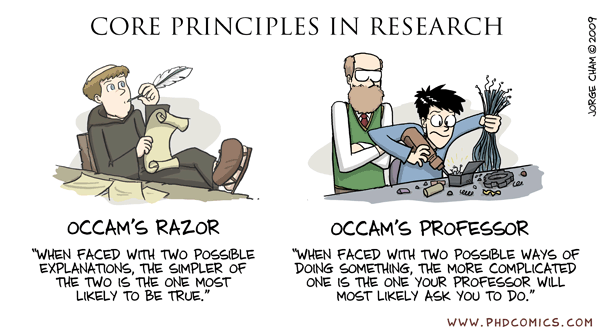
Occam's razor for graduate students!

Students in my lab had better take note - this is how things work in the real world of academic research:


phd101209s.gif

[via PHD Comics],


Read More...

Monday, October 5, 2009

"OMG!! Is that GMO in my dinner?" at tonight's Valley Café Scientifique


We resume the Central Valley Café Scientifique tonight after a prolonged summer hiatus - and at a new venue too! My colleague Dr. Alejandro Calderón-Urrea will start the new season with a talk about GMOs and suicidal worms! You know where to find the details, don't you? The Café's website, of course! And you've always had our Google Group to get email updates. But now there are a couple of new ways for you to keep up with the Café: join us on our new Facebook page, and follow us on twitter too! And soon, if we manage to master the technology, we may start podcasting the talks afterwards! So watch this space (and all the above spaces too) for that development.


Most importantly, of course, I hope to see you in person tonight!


Read More...

Monday, September 21, 2009

Scientia Pro Publica #12 is out

The 12th edition of the science themed blog carnival Scientia Pro Publica is out for your reading pleasure at Lab Rat. Enjoy this relatively brief issue - especially since it also features one of my recent blog posts - thanks Lab Rat!


Read More...

Friday, September 18, 2009

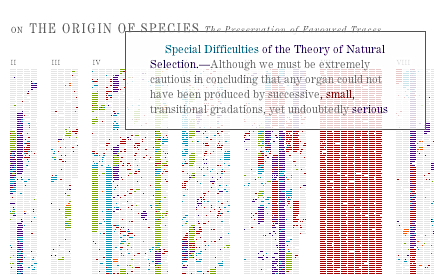
The Evolution of the Origin visualized

Origin-Evolution-visualized.jpg

My students know I never tire of emphasizing the self-corrective nature of science: how scientific theories are always dynamic theories, constantly being tested against reality, discarded if they fail the test, and continuously revised and refined as we get a better and better approximation of truth. A good example of a scientist who put his own ideas, his life's work, through this process of continual testing and refinement is of course, Charles Darwin. We all know about how he hesitated to publish his theory of evolution by natural selection for c.20 years, 15 of those after he had written out a detailed "outline", but his work didn't stop with the publication of On the Origin of Species in 1859 (we're coming up on the 150th anniversary of its publication in November this year). He continued to tinker with the book, tweaking the language, refining his arguments, and responding to criticisms as well by eventually adding a whole chapter on the subject - and publishing a total of 6 editions of the book over the next 13 years. Students taking Evolution at Fresno State have in recent years been reading the 1st edition of the classic book, chosen because we want them to experience the book as the world first encountered it, before Darwin had to worry about responding to critics. But the 6 editions themselves represent an evolution of sorts, with favored passages being preserved and refined while others were selected out. Darwin scholars have been studying the differences, and now the rest of us also have a new way to appreciate this textual evolution, through a fascinating new visualization created by Ben Fry of Seed Visualization's Phyllotaxis lab. This dynamic Flash graphic takes you through all the changes to the text much the same way a phylogeneticist might compare DNA sequence changes across a taxon's evolutionary lineage. And as you can see in the gel-like excerpt I've put at the top of this post, you can click on any "band" in any portion of the text-gel to read the mutations therein! Go check it out - its really cool! And read also Ben Fry's interview in Seed about this visualization.

Read More...

ShareThis

Darwin's tweets

Recent ScienceBlogs Posts on Peer-reviewed Papers

Current Readers

counter

  © Blogger template Brooklyn by Ourblogtemplates.com 2008

Back to TOP